
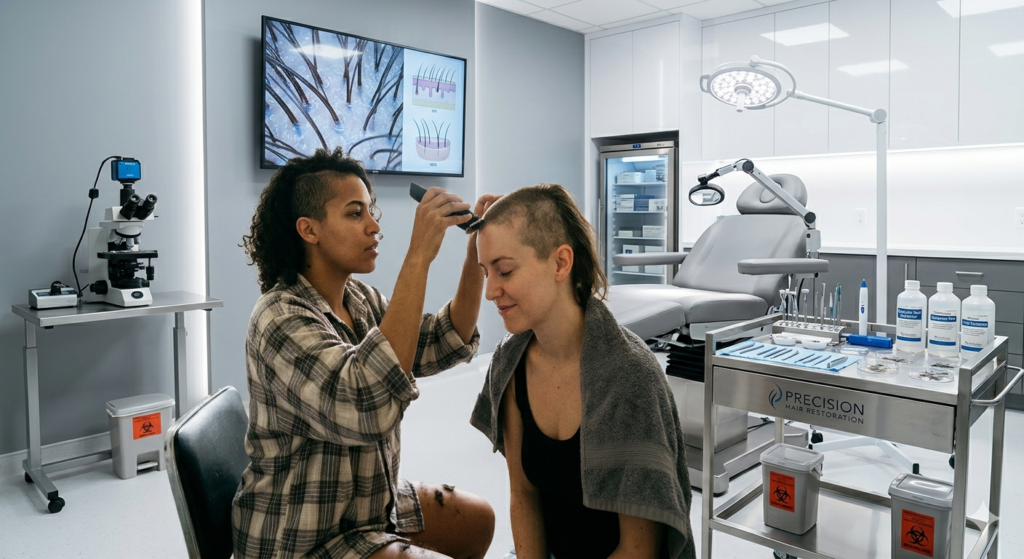
Losing hair isn’t only something men face. In the present scenario, lots of women deal with bald spots, fading edges, and thinner strands. These concerns can take place due to hormonal shifts, family history, health issues, tension, etc. That reality has led more women toward surgical restoration. Still, uncertainty lingers, especially about what comes before surgery: Is shaving your hair necessary?
Few realize how little cutting matters today when it comes to hair transplants. Modern methods allow full procedures while keeping most of the scalp covered. Women often keep their hairstyle intact throughout recovery. Progress in tools and precision means large shaved areas are rarely needed anymore.
A decision to move forward might begin with a visit to the top hair specialist in Allahabad – this step opens clarity on which method fits both your scalp needs and daily routine. Choosing care tailored to individual patterns of loss shifts outcomes significantly.
How Hair Transplants Work
From the lower part of the scalp, doctors remove small clusters of active follicles during a hair transplant. Often, the journey begins at the rear or edges of the head. Once relocated, they settle into skin that has lost its original coverage. Movement happens one graft at a time, carefully placed by trained hands.
Below are some of the popular hair transplantation methods:
1. FUE: Follicular Unit Extraction
After someone pulls a single strand from its root, they use it to help grow new hair in balding areas. The natural patterns determine placement, which does not create a perfect symmetrical distribution.
2. Follicular Unit Transplantation
A thin slice of scalp, complete with hair roots, is taken from a donor site through this method. Following removal, it’s broken down into smaller units before being placed elsewhere. Each piece moves individually, prepared carefully after extraction.
Follicles shift positions today through techniques meant to blend seamlessly with existing growth patterns. Surgical methods have reached advanced levels, which enable scars to become invisible. The medical field has changed its approach to procedures through its focus on delivering understated results that need no special recognition. The goal isn’t perfection – it’s silent authenticity that reflects actual human hair growth. The healing process develops through a route that creates minimal visible evidence of its existence.
Is Shaving the Head Compulsory for Women?
Most of the time, shaving a woman’s full scalp isn’t required prior to a hair transplant. Today’s approaches differ sharply from older ones – doctors now operate on longer strands without losing detail or control.
Still, based on how the process goes, a little cutting or spot shaving might happen.
Partial Shaving of the Donor Area
Often, just a narrow strip from the scalp’s rear gets cut short. Hidden beneath nearby strands, this spot stays out of sight while healing progresses.
No Shave Methods for Hair Transplants
Nowadays, certain clinics provide hair transplants without requiring patients to shave their heads – commonly known as Unshaven Follicular Unit Extraction.
In this approach:
- Follicles get pulled one by one, skipping the need to clear wide areas of the head.
- Still untouched is the hair around it.
- Few see signs of it while healing unfolds.
Faster results aren’t guaranteed with this approach, plus it often demands a specialist’s skill. While effective, the process tends to stretch out when precision matters most.
When Shaving Might Be Advised
Bare skin isn’t usually needed for female patients, yet certain procedures could lead a doctor to suggest it. Sometimes preparation includes the removal of hair, depending on medical judgment rather than routine practice.
- Large Number of Grafts
A full shave could make it easier for the doctor to reach the donor zone when many grafts are required, boosting precision. Though not always necessary, cutting the hair short often allows smoother movement during extraction. With less resistance from longer strands, tools glide better across the scalp.
- Better Visibility During Surgery
Surgeons depend on specific patterns that become visible when they examine short hair closely. The direction of hair becomes clear when the hair is cut back to its shortest length. The angle between two objects becomes an essential factor because it determines the exact choice. The environment creates conditions that produce clear results but also create hidden effects.
- Faster Procedure
Getting the donor section trimmed speeds things up during removal. Efficiency rises when hair is shorter there.
Still, in such situations, most surgeons aim for little hair removal to maintain a low-profile approach.
Benefits of Hair Transplant for Women
Hair transplants benefit women who suffer from hair loss and thinning hair. Most people experience different outcomes, but many will see their hair density increase with time. The recovery process requires several weeks to complete, but most people will resume their normal activities after two days. Some feel more confident after seeing growth. Not every candidate qualifies, depending on donor supply. Effects last for years, sometimes decades, if conditions stay stable.
- Natural-looking results
Follicles settle into their new location, then begin growing in rhythm with surrounding strands. Over time, they match the pattern of nearby growth.
- Improved confidence
Fresh volume in hair often lifts how people feel about themselves. A fuller look changes the way one sees their reflection.
- Minimal downtime
A few days after treatment, most people return to their usual routines.
A visit to a skilled hair specialist in Allahabad might reveal if transplantation fits your specific needs. Clarity often comes through professional insight tailored to you.
What Happens After the Procedure?
Few people find healing after a hair transplant complicated. Scabs tend to form occasionally, though they clear without issue.
A few weeks after the transplant, hair might fall out briefly – this happens naturally. Starting around month three or four, fresh strands emerge gradually. Outcomes become clear between nine and twelve months later.
Healing well often depends on how closely you follow the care steps shared by your doctor after treatment. A clear path to better hair regrowth begins with sticking to those guidelines.
How to Find a Good Hair Transplant Doctor
A successful hair transplant often comes down to who performs it. When a specialist has done many procedures, outcomes tend to improve. Skill shows how natural the new growth looks. Experience helps avoid common problems during recovery. The right background means better decisions about graft placement. Years in practice can make a noticeable difference afterward.
- Accurate graft placement
- Natural hairline design
- Minimal scarring
- Long-lasting results
Starting with a specialist in hair care might clarify what choices exist for restoring lost strands. A top surgeon, focused on scalp health, could examine how thinning progresses across your head. From there, tailored steps emerge based on individual needs and growth potential. Seeing the right expert opens clearer paths forward.
Conclusion
Fear about losing long locks during surgery keeps many women hesitant, yet today’s methods ease that stress significantly. Most situations demand just small cuts or limited clipping instead. Some newer approaches let patients avoid any shave at all – keeping hairstyles intact throughout the process.
Women who receive early treatment from experienced hair specialists will most likely achieve natural hair regrowth. People who notice their hair falling out should visit experienced hair specialists in Allahabad, which offers dependable hair restoration solutions. Progress usually shows without altering daily routines. Seeing clearer results tends to follow once personalized plans take shape. Recovery paths differ, yet many find balance between look and healing. Fullness returns quietly, step by step.
Frequently Asked Questions:
1. Do women need to completely shave their head for a hair transplant?
Most times, female patients keep their full hairstyle during hair restoration. Instead of total shaving, specialists typically cut just a narrow strip from the lower rear section.
2. Could women get a hair transplant without shaving their heads?
Certainly, a few clinics provide options like Unshaven FUE, where cutting the surrounding hair isn’t necessary. Follicles are removed and placed while leaving most of the scalp’s hair intact. That said, the process can extend in duration.
3. How do I choose the right specialist for a hair transplant?
You must perform comprehensive research, check patient reviews and testimonials before choosing the right hair transplant specialist.
