
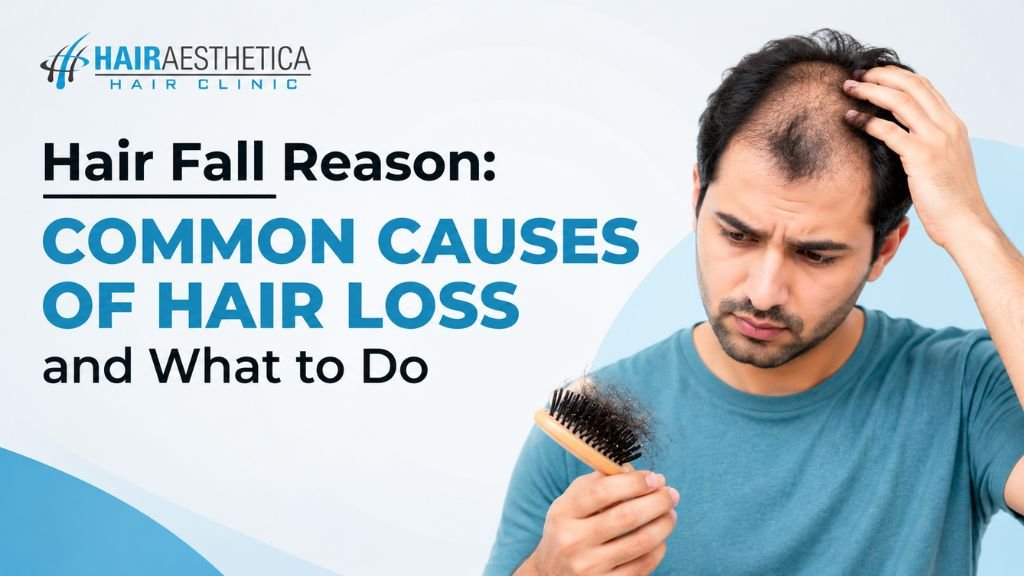
All of a sudden, you notice some more strands on your pillow, some more in the shower drain, and the anxiety begins. Losing your hair is a personal thing and can take a toll on your self-confidence. The bright side is that shedding usually happens for a reason. With knowledge of what’s happening, you can make a suitable choice rather than a guess.
Understanding The Causes Of Hair Fall Helps You Spot Problems Early And Act With Confidence.
It’s normal to shed because most people shed between 50 and 100 strands of hair a day. Things begin to go wrong when the shedding accelerates or when thinning spots show up. Hair grows in phases, and any disruption of this process can cause more hairs to enter the resting phase. This is because identifying the trigger is a crucial aspect. When you identify your own hair fall reason, the route to thicker and healthier hair is a lot more evident.
Genetics and Family History
There is a lot of family history associated with pattern hair loss, which is sometimes considered one of the major causes of hair loss. If your parents or grandparents thinned out early in their lives, then your follicles might contract slowly over time. In males, it generally begins in the temples and crown. In females, the hairline thins and the volume decreases. This type is slow-moving. It can be slowed by treatment and, in some cases, density can be improved, but treatments are more effective before large areas become thinned.
Hormones and Life Changes
Hormones are the switches to your hair cycle. Heavy shedding can be caused by pregnancy, childbirth, menopause, and thyroid issues. PCOS may also lead to hair loss and to acne or irregular periods. Shedding after childbirth may happen in the initial few months and usually clears up after that; however, shedding triggered by thyroid issues requires testing and treatment. If you noticed your hair changing in sync with changes in your energy, weight, or cycle, hormones should be a bigger concern.
Diet Gaps and Deficiencies
Hair is a hungry tissue, and it requires constant food. Deficiencies of iron, vitamin D, zinc, and protein can contribute to hair thinning. Crash diets and missing meals only exacerbate the situation. Numerous women and vegetarians may experience iron deficiency without realizing it. If the gap is found to be contributing to shedding, it can usually be closed with food or supplements, and the shedding should stop in a few months with professional guidance.
Stress, Illness and Poor Sleep
When your body senses that it is being attacked, it stops growing hair. Many hairs at once may fall into the resting phase due to a high fever, surgery, serious illness, or long-term stress. The shedding may not be noticed for two or three months after the initial trigger and can be difficult to see. The positive side is that this type of loss is usually temporary when the stress abates.
Hair Care Habits That Hurt
Many subtle, everyday behaviors can undermine the health of your hair. The ponytails and braids pull at the roots. Too many heat-styling sessions, too many serious chemical dyes and treatments dry out and break the hair. A towel can cause wet hair to break. Use a wide comb, less harsh products, and looser styles. You’ll find that less hair will break after giving your scalp the break that it needs, and you can see the difference in just a couple of weeks.
When to See a Specialist
Home changes are helpful, but there are occasions where expert eyes are required. If you notice heavy shedding, bald patches, itching, or pain on the scalp, or if things don’t improve in 3 months, please see a professional. While you’re visiting the best hair doctor in allahabad, make sure that they are listening to you, are in a position to look at your scalp correctly, have ordered the appropriate tests when needed, are being honest with you about all your options, and then offer you a treatment plan based on your diagnosis and individual needs.
Simple Steps to Start Today
Hair loss seems like a tremendous burden, but it’s usually for a reason and, for the most part, the underlying cause can be identified and treated or managed with appropriate guidance. At Hair Aesthetica, we take the time to evaluate your scalp thoroughly, offer honest recommendations, and provide a treatment plan that is tailored to you. It’s patient-first and clear, enabling people to move forward with confidence, one step at a time.
Have concerns about your hair? Schedule a consultation today with us and begin your journey to fuller, healthier hair!
